HEI Scores Big Wins on Wildfire Mitigation, Rate Rebasings, and Renewable Energy Plans
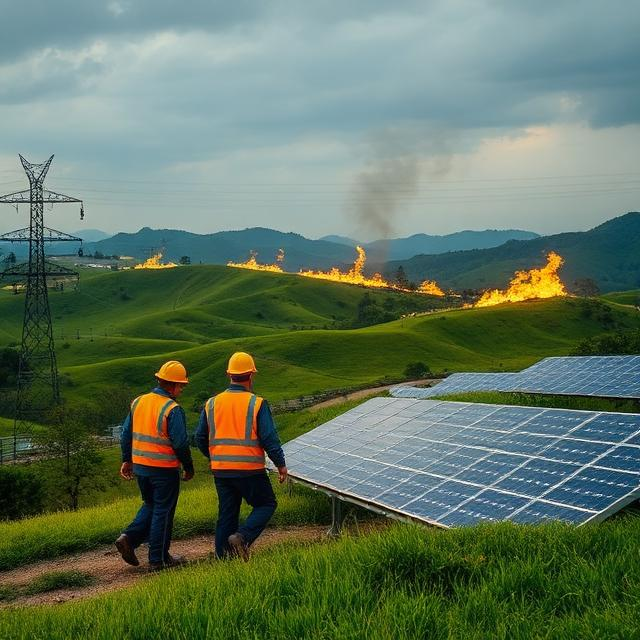
HEI, a leading energy provider, has wrapped up an impressive second quarter with key wins in wildfire mitigation, rate rebasings, and renewable energy planning. The company's recent conference call provided valuable insights into its strategic priorities and financial performance.
During the Q2 2026 earnings call, HEI CEO Scott Seu highlighted the approval of its Wildfire Mitigation Plan (WMP) by the Public Utilities Commission (PUC). The plan aims to reduce wildfire risk through a three-year strategy, which includes capital expenditures of approximately $270 million and operational & maintenance expenses of around $80 million. Notably, the PUC also granted HEI's request to recover these costs through the Exceptional Project Recovery Mechanism (EPRM), totalling $350 million.
HEI has now shifted its focus towards securitization for recovery of WMP-related costs. The company plans to request a financing order from the PUC, allowing it to implement critical investments at the least possible cost to customers. As affordability remains a core priority, this approach is expected to provide significant benefits to customers.
The company's rate rebasing efforts are also gaining momentum. HEI submitted its rate rebasing request in early March, which was accepted by the PUC in June. The Commission directed HEI to refile its request in a new docket, and the company has since resubmitted its proposal. The proposed base rate increase of $170 million is phased over two years, with $125 million taking effect in 2027.
HEI's commitment to renewable energy planning was also underscored during the conference call. In June, the company filed an update to its Integrated Grid Plan (IGP), which proposes actions that prioritize affordability and advance energy equity. The plan includes using competitive procurements for all types of renewable generation to attract low pricing for customers.
In another significant move, HEI submitted a final request for proposals (RFP) to the PUC on July 17, seeking nearly 1,650 gigawatt-hours of variable renewable energy, 465 megawatts of grid-forming resources, and 111 megawatts of firm generating capacity. This will be one of the largest competitive procurements for generation resources in state history.
The company's Q2 financial results were not detailed during the conference call. However, HEI's forward-looking statements suggest that it is poised to continue its growth trajectory, driven by strategic investments in wildfire mitigation, rate rebasings, and renewable energy planning.
"
![Bucking Trends: [Company Name] Delivers Strong Q3 Performance Amidst Industry Headwinds](/content/images/size/w600/2026/10/downloaded_image-76.png)